AtaGenix Laboratories

AtaGenix Laboratories

2025-08-25
SARS-CoV-2 Spike Peptide Mapping & Patient-Derived Neutralizing Antibody Discovery | AtaGenix
A 2021 Small Methods study used dual phage display libraries — an overlapping spike peptide library for epitope mapping and a 8.7×10⁹ patient-derived ScFv library for antibody discovery — to identify three immunodominant RBM epitopes (S431–454, S470–486, S501–515) and isolate human neutralizing monoclonal antibodies from COVID-19 patients. S470–486 emerged as the key protective epitope (diagnostic AUC ~1.0; mouse immunization produced neutralizing antibodies). AtaGenix provided phage library construction, biopanning screening, and antibody expression services that enabled the 10⁹-scale discovery campaign. DOI: 10.1002/smtd.202100058.
2025-08-24
Shrimp MANF: Anti-Inflammatory Discovery via Phage Display & Custom ELISA | AtaGenix
A 2022 J. Immunology study identified shrimp MANF as a conserved anti-inflammatory plasma protein that suppresses ERK/NF-κB via RPTP binding in hemocytes. AtaGenix provided the three critical reagents that made this discovery possible: phage display-derived monoclonal antibodies for MANF detection, CHO-expressed recombinant MANF for functional signaling studies, and a custom sandwich ELISA that demonstrated LPS-induced MANF secretion in vivo. Cross-species experiments in human 293T cells confirmed the MANF–RPTP axis is conserved across 600 million years of evolution. DOI: 10.4049/jimmunol.2100595.

2025-10-14
AtaGenix Custom Anti-TauN368 Antibody Enables hTau368 Alzheimer’s Model Research and Uncovers the Pathological Role of Truncated Tau
AtaGenix provides highly specific anti-tauN368 monoclonal antibodies to support Alzheimer’s disease research using the hTau368 transgenic mouse model. These antibodies enable precise detection of truncated tau fragments in Western blot and immunofluorescence experiments, validating tau accumulation, phosphorylation, and associated cognitive deficits in the hippocampus. With exceptional specificity and stability, AtaGenix’s solutions empower researchers to explore tau pathology mechanisms and advance tau-targeted therapeutic development.

2025-10-14
AtaGenix Custom Phospho-specific Antibody Service Facilitates the Discovery of a Novel Mechanism of G Protein-Mediated Growth Regulation in Tomato
The study identified that GGC1 negatively regulates plant growth and photosynthesis by inhibiting CPK28-mediated phosphorylation of PIP1;2 at Thr172. The phospho-specific antibody custom-developed by AtaGenix provided crucial experimental support for elucidating this GGC1–CPK28–PIP1;2 signalling pathway, offering new insights into G protein-mediated regulation of plant growth.
2025-10-09
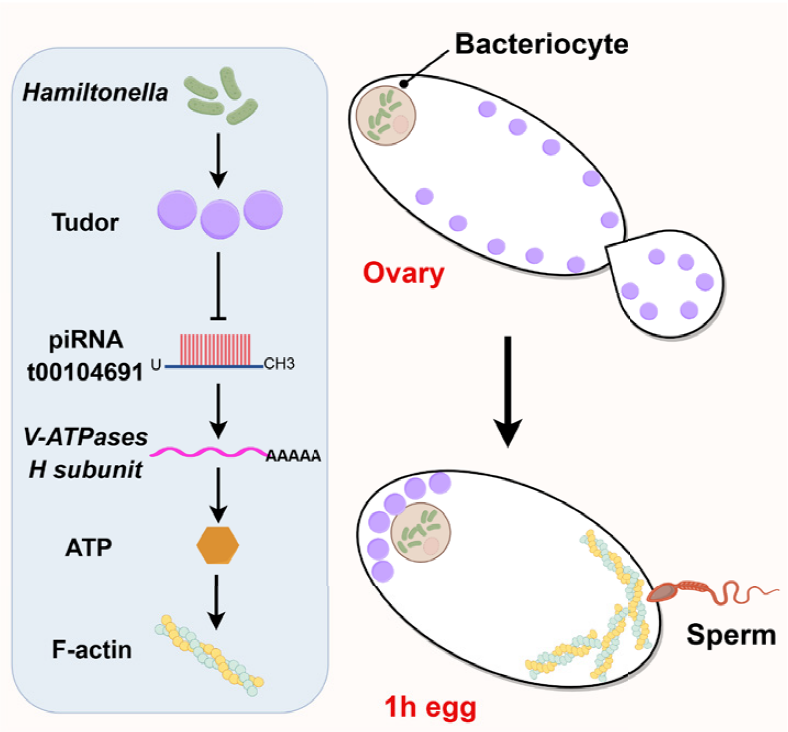
AtaGenix Custom Anti-Tudor Polyclonal Antibody Facilitates the Elucidation of Insect–Microbe Symbiosis Mechanisms
Atagenix offers customised anti-Tudor polyclonal antibody services, addressing challenges of antibody availability and detection specificity in the non-model organism Bemisia tabaci. Through antigen design, antibody production, and multi-level validation, the antibody enables highly specific detection in Western blot and immunofluorescence, providing reliable tools for uncovering how the symbiont Hamiltonella regulates host Tudor protein and reproductive mechanisms.

2025-08-25
AtaGenix Empowers Research on Shrimp Plasma MANF's Anti-Inflammatory Role via Conserved Receptor Tyrosine Phosphatase
This study experimentally identifies shrimp plasma mesencephalic astrocyte-derived neurotrophic factor (MANF) as an LPS-induced protein that inhibits ERK phosphorylation and Dorsal expression in Litopenaeus vannamei hemocytes, elucidating its inflammation regulation mechanism via a conserved receptor tyrosine phosphatase (RPTP). AtaGenix supports the development of high-affinity antibodies, advancing research progress and providing new insights into the evolution of inflammation in invertebrates.

2025-08-20
AtaGenix Customized Phosphorylated Polyclonal Antibodies Unveil the Role of SLKv in Cancer Glycolysis
This pioneering study leverages AtaGenix customized phosphorylated polyclonal antibodies to explore the critical role of the alternatively spliced variant of Ste20-like kinase (SLKv) in enhancing cancer glycolysis and tumor progression. Researchers demonstrated that SLKv boosts enolase 1 (ENO1) activity by binding and phosphorylating its serine 2 residue, significantly increasing phosphoenolpyruvate (PEP) production. This metabolic shift accelerates glycolysis by activating key enzymes such as hexokinase 2 (HK2), phosphofructokinase muscle (PFKM), and phosphoglycerate mutase 1 (PGAM1), with TGFβ-mediated splicing factor KHDRBS1 driving SLK exon skipping. The precision of AtaGenix’s phospho-specific ENO1-S2 antibody enabled accurate quantification of phosphorylation levels, enhancing the study’s reliability. Targeting SLKv with antisense oligonucleotides effectively inhibits glycolysis and tumor growth, marking it as a promising metabolic target for cancer therapy.
2025-08-04
AtaGenix’s Customized ATG8 Antibody Solutions for Studying Amino Acid Metabolism Reprogramming in BmNPV-Infected Silkworms
Bombyx mori nucleopolyhedrovirus (BmNPV) significantly impacts sericulture by reprogramming host amino acid metabolism to support viral replication. AtaGenix provides tailored solutions, including high-specificity ATG8 polyclonal antibodies, to address research challenges in studying BmNPV-induced autophagy and arginine metabolism. These antibodies, validated through immunofluorescence and Western Blot, ensure reliable detection of autophagy markers, aiding researchers in uncovering the virus’s metabolic regulation mechanisms. Supported by advanced gene editing and analytical techniques, our services empower research teams to advance antiviral strategies with agricultural applications.
2025-07-14
AtaGenix’s Custom Phospho-USP8 Antibody Advances MDA5 Homeostasis Research, Unveiling a Novel Target for Autoimmune Therapy
A research team from the Sichuan Academy of Medical Sciences and Sichuan Provincial People’s Hospital revealed that phosphorylation of USP8 at Ser718 by AKT regulates the stability of MDA5, a key player in innate antiviral immunity and autoimmune responses. To investigate this mechanism, AtaGenix developed a custom rabbit antibody targeting the phosphorylated Ser718 site on USP8. This high-specificity antibody enabled the team to detect dynamic USP8 activation in cells, confirming its role in MDA5 regulation. The study, published in Advanced Science, provides a new perspective for targeting USP8–MDA5 signaling in autoimmune disease therapy.
2025-06-20
AtaGenix Provides Custom CHALK10 and SD1 Protein Expression and Rabbit Polyclonal Antibody Services for Rice Chalkiness Research at China National Rice Research Institute
AtaGenix Laboratories Co., Ltd. partnered with the State Key Laboratory of Rice Biology and Breeding, China National Rice Research Institute, to provide custom protein expression and rabbit polyclonal antibody production services for a rice chalkiness study published in Plant Communications (DOI: 10.1016/j.xplc.2025.101354). The study identified CHALK10, an F-box protein, as a negative regulator of grain chalkiness by promoting the ubiquitination and degradation of SEMIDWARF-1 (SD1). AtaGenix expressed CHALK10 and SD1 proteins in Escherichia coli Rosetta (DE3) cells, purified them using affinity chromatography, and produced specific rabbit polyclonal antibodies. Validated through co-immunoprecipitation (co-IP) assays, these reagents supported the study’s findings on CHALK10’s role in regulating gibberellin-mediated starch metabolism, advancing rice grain quality research.

2025-06-20
AtaGenix Delivers Custom Rabbit Polyclonal Antibody Services for Haojie Hao’s Team at Wuhan Institute of Virology
AtaGenix Laboratories Co., Ltd. collaborated with the research team led by Haojie Hao at the Wuhan Institute of Virology to develop a custom mouse polyclonal antibody (pAb) against the Nipah virus (NiV) M protein, supporting a groundbreaking study published in Viruses (DOI: 10.3390/v17060831, IF: 3.8 Q2). The study revealed the critical role of N6-methyladenosine (m6A) modification in enhancing NiV replication and pathogenicity, particularly in the NiV-Malaysia strain. By designing specific antigens and delivering high-titer pAbs validated through Western blot assays in biosafety level 4 (BSL-4) conditions, AtaGenix enabled the team to confirm the M protein’s role in modulating host m6A machinery, advancing antiviral research.
2024-11-05
Antibody Fragment Production
Using AtaGenix's mammalian cell expression system, various antibody fragments have been successfully expressed, including scFv, VHH, Fab, and scFv-Fc-scFv, meeting diverse research and development needs.The accompanying images demonstrate the expression results and workflow of antibody production using this advanced system.

Contact Us

+86-27-65523339

info@atagenix.com

Building C, R & D Building, No. 666, Shendun 4th Road, Donghu New Technology Development Zone, Wuhan