AtaGenix Laboratories

AtaGenix Laboratories
AtaGenix's proprietary Caprines-Native-scFv naïve phage display library is derived from multiple breeds of goat and sheep (subfamily Caprinae). Multi-breed sourcing broadens immune repertoire diversity. Goat and sheep sub-libraries are constructed independently — clients can choose combined or single-species panning with no restrictions. No target-specific animal immunization required. Candidates delivered in 6-8 weeks from antigen receipt.
31 Billion
Library Capacity (cfu)
98.0%
Insertion Accuracy
4 Breeds
Goat + Sheep (24 Animals)
6–8 wks
Antigen to Antibody
Goat and sheep sub-libraries are constructed independently, offering flexible panning options: clients can choose combined panning (covering the sequence diversity of both species simultaneously) or single-species panning (goat-only or sheep-only), with no restrictions. No target-specific animal immunization is required — candidates can be identified directly from the naïve repertoire.
Goats and sheep are phylogenetically distant from humans, mice, and rabbits — the most common antibody host species — offering the potential to access different epitope recognition profiles and expanding the antibody discovery space for conserved targets. Caprine-derived antibodies offer distinct advantages in the following contexts:
Multiplex Immunostaining — Facilitates multi-host primary antibody panels with mouse/rabbit antibodies, reducing secondary antibody cross-recognition and expanding multiplexing options
Sandwich ELISA & Diagnostic Development — Enables additional pairing combinations with antibodies from different host species, providing more candidates for non-competing epitope selection
Conserved Targets & Antigens Not Amenable to Immunization — Bypasses target-specific animal immunization, offering an alternative antibody discovery route for highly conserved, potentially toxic, or otherwise difficult-to-immunize antigens
| Sub-library | Breed Source | Capacity (cfu) | Insertion Rate | Insertion Accuracy | Seq. Accuracy |
| Goat-LH (2026) | Boer , Local | 1.132×10¹⁰ | 100% | 98.6% | >85% |
| Sheep-LH (2026) | Small-tailed Han, Dorper | 1.969×10¹⁰ | 99.6% | 97.5% | >85% |
| Combined | Multi-breed | 3.101×10¹⁰ | — | 98.0% | >85% |
NGS analysis shows that the library covers multiple major light chain and heavy chain V-gene families, including light chain families IGKV1/2 and IGLV1/2/3/8, with the heavy chain dominated by IGHV1S1 (62%) alongside IGHV1S2/S3/S4/S6/S9.

Figure 1. Germline gene distribution — Left: Light chain (IGKV/IGLV); Right: Heavy chain (IGHV)
The CDR3 region is the primary determinant of antigen-binding specificity. VH-CDR3 lengths in this library center around 12–17 amino acids (peak at 15 aa), while VL-CDR3 lengths cluster at 9–11 amino acids (peak at 10 aa), showing a concentrated and continuous length distribution with no apparent single-length bias.

Figure 2. CDR3 length distribution — Left: VH-CDR3 (heavy chain); Right: VL-CDR3 (light chain). Peak values highlighted in orange.
Recombinant caprine antibodies have been successfully panned from this library against multiple targets, with binding activity confirmed by ELISA and specificity verified by Western Blot:
| Target | MW | Validation | Clone ID |
| GlmM | 41.98 kDa | ELISA Binding + WB | R3P1-A4 / A5 / A11 |
| Human B3GNT6 | 37.37 kDa | ELISA Binding + WB | R2-4P1-A4 |
| Human CLEC7A (Dectin-1/CD369) | 16.71 kDa | ELISA Binding + WB | R4P1-C11 / H1 |
ELISA EC50 reflects binding activity trends and is not equivalent to affinity constant (KD). Hit rates are target-dependent.
3 positive clones (R3P1-A4 / A5 / A11). EC50 range: 91.6–215.3 ng/mL. Single band at expected MW confirmed by WB.

1 positive clone (R2-4P1-A4). EC50: 2,002 ng/mL. Specific band at ~37 kDa confirmed by WB.

2 positive clones (R4P1-C11 / H1). EC50: 1,261–1,480 ng/mL. Clean band at ~17 kDa confirmed by WB.

Dual-Species, Flexible Panning
Goat + sheep from 4 breeds, independently constructed. Choose combined panning for maximum diversity, or single-species panning for goat-only or sheep-only candidates.
No Immunization, Fast Turnaround
Naïve library panning delivers caprine recombinant antibody candidates in 6–8 weeks from antigen receipt. No target-specific animal immunization required.
Flexible Output Formats
scFv purified via affinity tag; scFv-Fc and IgG purified via Protein A/G. HEK293 or CHO expression available.
Looking for other species or formats? Our phage display platform also offers Human / Mouse / Rabbit / VHH naïve libraries, Hybridoma for traditional mouse mAb, and Single B Cell for rapid rabbit mAb discovery.
Why choose caprine (goat/sheep) antibodies over mouse or rabbit?
Goats and sheep are phylogenetically distant from humans, mice, and rabbits, offering the potential to access different epitope recognition profiles and expand the antibody discovery space for conserved targets. This makes caprine antibodies particularly useful for multiplex immunostaining panels, sandwich ELISA paired-antibody development, and targets not amenable to conventional immunization.
Can I choose goat-only or sheep-only panning?
Yes. The goat and sheep sub-libraries are constructed independently. You can choose combined panning (both species pooled for maximum diversity), or specify goat-only or sheep-only panning with no restrictions.
What antibody formats can I get?
Primary screening output is scFv. Selected candidates can be reformatted to scFv-Fc fusion proteins or full-length IgG. scFv is purified via affinity tag; scFv-Fc and IgG are purified via Protein A/G. HEK293 or CHO expression systems are available.
What are the deliverables?
Standard delivery includes ≥3 ELISA-validated positive recombinant antibody clones (purified, ≥0.2 mg each), complete scFv sequences with VH and VL variable region data, phage ELISA and functional validation report, and SDS-PAGE / SEC-HPLC purity analysis. Optional add-ons include WB, flow cytometry, and SPR/Biacore affinity measurement.
Hit rates are target-dependent. Quote-based pricing — contact Sales@atagenix.com for a customized project proposal.
AtaGenix's Caprines-Native-scFv naïve phage display library (3.101×10¹⁰ cfu, goat + sheep from 4 breeds, 24 animals) enables rapid discovery of caprine recombinant antibodies without target-specific animal immunization. Through 3–4 rounds of affinity biopanning, target-specific scFv clones are enriched and identified. Selected candidates can then be reformatted into scFv-Fc fusions or full-length IgG — with scFv purified via affinity tag, and scFv-Fc/IgG via Protein A/G — and validated by ELISA, Western Blot, and/or Flow Cytometry. Standard turnaround: 6–8 weeks from antigen receipt. Guaranteed ≥3 ELISA-validated positive clones with complete scFv and VH/VL variable region sequence data.
No target-specific immunization required — go directly from antigen to recombinant goat/sheep antibody candidates in 6–8 weeks.
01
Antigen Preparation
Client-supplied or AtaGenix-expressed
Recommended ≥0.5 mg, ≥90% purity
1–2 weeks
02
Biopanning
3–4 rounds affinity selection
Combined or single-species panning
2–3 weeks
03
Screening & Sequencing
Monoclonal phage ELISA
Positive clone picking
Sanger sequencing (scFv, VH/VL)
04
Expression & Validation
scFv / scFv-Fc / IgG reformatting
HEK293 or CHO expression
ELISA, WB, FC validation
Deliverables
| ✓ ≥3 ELISA-validated positive recombinant antibody clones | ✓ Purified protein (≥0.2 mg per clone) |
| ✓ Complete scFv sequences with VH/VL variable region data | ✓ SDS-PAGE / SEC-HPLC purity analysis |
| ✓ Phage ELISA screening report | ✓ Functional validation report (ELISA / WB) |
| ✓ Sequence diversity analysis | ✓ Optional: FC, SPR/Biacore affinity measurement |
Standard turnaround 6–8 weeks from antigen receipt. Hit rates are target-dependent. Quote-based pricing.
Explore real-world yeast protein expression case studies from AtaGenix. Our Pichia pastoris and Saccharomyces cerevisiae platforms deliver high-yield recombinant proteins with proper folding and glycosylation — supporting enzyme production, diagnostic antigen development, and antibody screening applications.
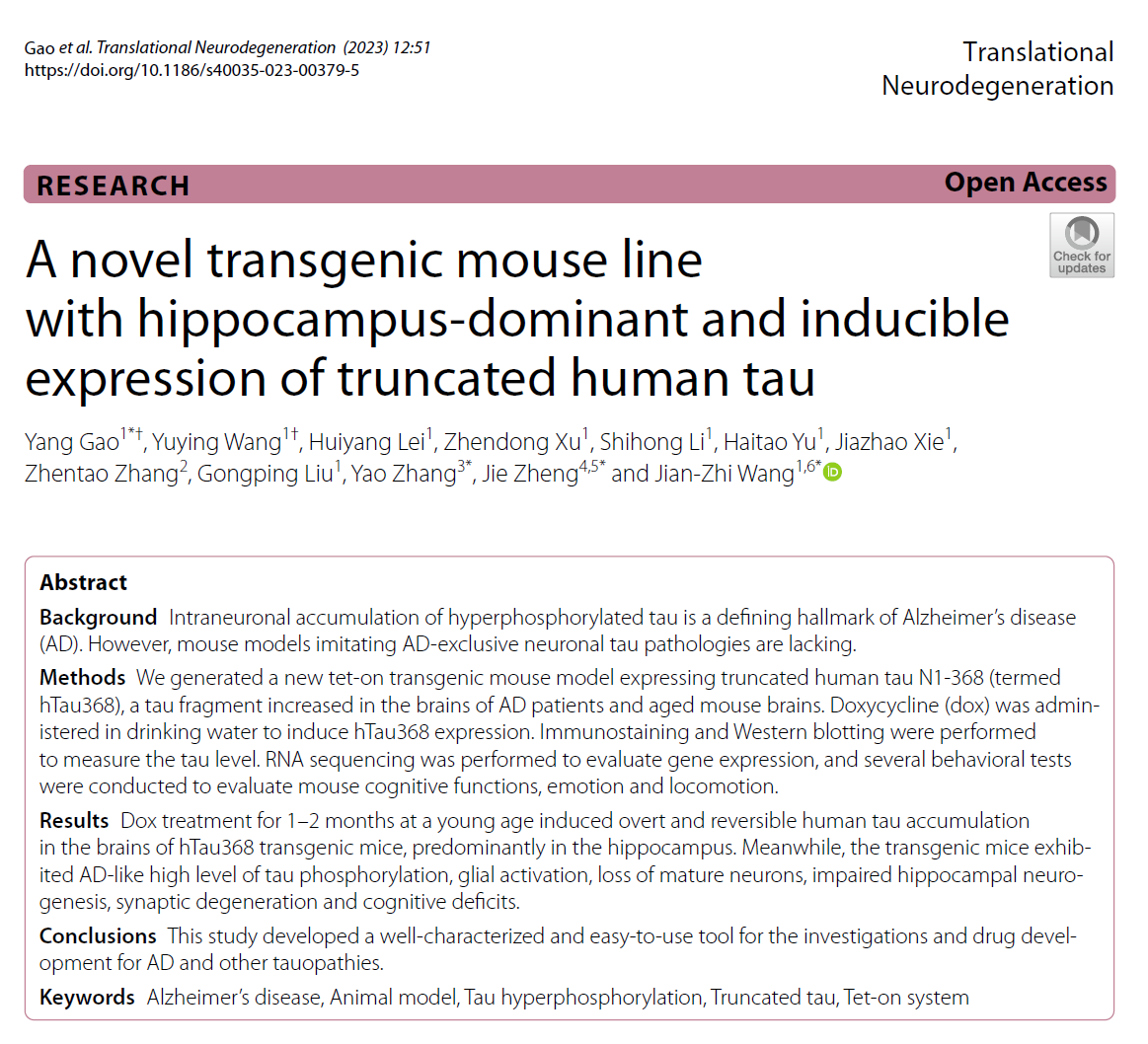
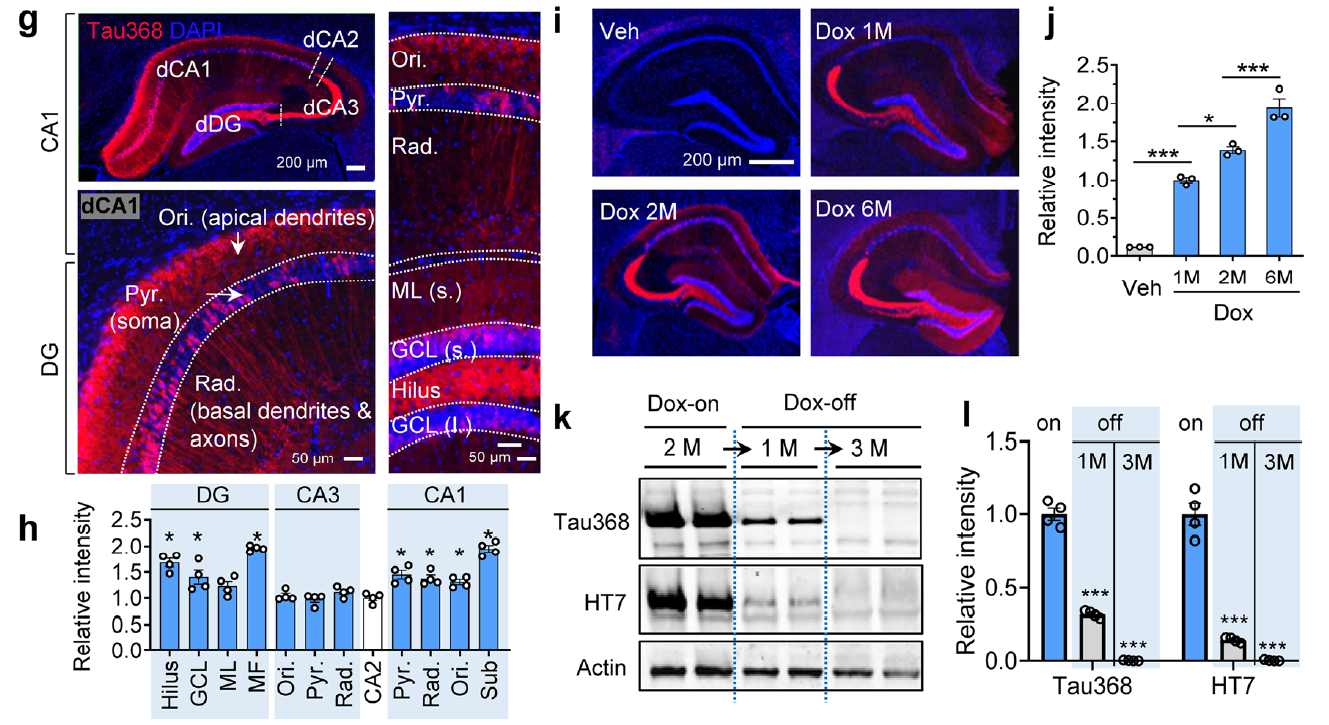
AtaGenix provides highly specific anti-tauN368 monoclonal antibodies to support Alzheimer’s disease research using the hTau368 transgenic mouse model. These antibodies enable precise detection of truncated tau fragments in Western blot and immunofluorescence experiments, validating tau accumulation, phosphorylation, and associated cognitive deficits in the hippocampus. With exceptional specificity and stability, AtaGenix’s solutions empower researchers to explore tau pathology mechanisms and advance tau-targeted therapeutic development.
Contact Us

+86-27-65523339

info@atagenix.com

Building C, R & D Building, No. 666, Shendun 4th Road, Donghu New Technology Development Zone, Wuhan