AtaGenix Laboratories

AtaGenix Laboratories
AtaGenix's naïve library panning platform enables rapid antibody discovery without animal immunization. With 9 pre-built libraries spanning 7 species (human, camelid, dog, cat, rabbit) and 3 formats (scFv, VHH, peptide), library diversities reach up to 7.38 × 10¹⁰. Fully human, nanobody, or companion animal antibody candidates can be identified in as few as 2–3 weeks from receiving your antigen.
9
Pre-Built Libraries
10¹⁰
Max Diversity
No
Immunization Needed
2–3 wks
To First Hits
Compared to hybridoma technology, naïve library panning eliminates the 8–12 week immunization cycle and delivers antibody sequences directly — no humanization needed for human libraries. This makes it the fastest route to fully human therapeutic antibody candidates, companion animal antibodies (dog, cat), or camelid nanobodies.
| Library | Format | Species / Source | Diversity |
| LiAb-SFMAX™ | scFv | Human — 5 ethnic groups, 368 donors | 7.38 × 10¹⁰ |
| LiAb-SFCOVID-19™ | scFv | Human — COVID-19 recovered donors | 1.35 × 10¹⁰ |
| LiAb-SFAutoimmune™ | scFv | Human — autoimmune disease donors | 4.78 × 10⁹ |
| LiAb-VHHMAX™ | VHH | Camel, llama, alpaca — 76 donors | 2.71 × 10¹⁰ |
| LiAb-SFRab™ | scFv | Rabbit — 5 breeds, 64 donors | 2.95 × 10¹⁰ |
| LiAb-SFDab™ | scFv | Dog — 6 breeds, 26 donors | 1.52 × 10¹⁰ |
| LiAb-SFCab™ | scFv | Cat — 10 breeds, 78 donors | 1.67 × 10¹⁰ |
| LiPep-12 / LiPep-7 | Peptide | 12-mer and 7-mer random peptide libraries | 1.00 × 10⁹ each |
No Immunization, No Waiting
All 9 libraries are pre-built and ready to pan. Send your antigen, get hits in 2–3 weeks. Eliminates the 8–12 week immunization cycle required by hybridoma or immune library routes.
Companion Animal Antibodies
Dog (LiAb-SFDab™) and cat (LiAb-SFCab™) naïve libraries — a rare offering in the market. Enables species-matched antibody discovery for veterinary therapeutics and diagnostics without canine or feline immunization.
Disease-Enriched Human Libraries
LiAb-SFCOVID-19™ (recovered donors) and LiAb-SFAutoimmune™ (autoimmune patients) provide pre-enriched repertoires for disease-relevant targets. Higher hit rates for pathogen antigens and autoimmune biomarkers.
AtaGenix maintains 9 pre-built naïve phage display libraries covering human (LiAb-SFMAX™, 7.38 × 10¹⁰), camelid VHH (LiAb-VHHMAX™, 2.71 × 10¹⁰), rabbit, dog, cat, and disease-enriched human (COVID-19 recovered, autoimmune) repertoires. Libraries are ready to pan immediately upon receiving your antigen — no immunization, no library construction delay. The standard workflow covers 3–5 rounds of biopanning, monoclonal ELISA screening, sequence analysis, and optional recombinant expression with functional validation. First hits in 2–3 weeks; full project delivery including expressed antibody in 3–4 months.
A streamlined 5-step pipeline from antigen to validated antibody. No immunization or library construction needed — all libraries are pre-built and ready to pan.
01
Library & Antigen
Select library by species/format
Prepare antigen for coating
or biotinylation (solution panning)
02
Biopanning
Incubation with phage library
Wash away non-binders
Elute specific binders
03
Enrichment (3–5 rounds)
Amplify eluted phage
Repeat panning rounds
Track enrichment by polyclonal ELISA
04
Screening & Sequencing
Monoclonal phage ELISA
Positive clone picking
Sequence analysis & diversity
05
Expression & Validation
Recombinant expression
ELISA, WB, FC validation
Affinity measurement (optional)
Service Scope
| ✓ 9 pre-built libraries (human, VHH, rabbit, dog, cat, peptide) | ✓ Solid-phase, solution-phase, and cell-based panning |
| ✓ 3–5 rounds biopanning with enrichment tracking | ✓ Monoclonal phage ELISA + competitive ELISA |
| ✓ Full sequence analysis & diversity assessment | ✓ Recombinant expression (E. coli / HEK293 / CHO) |
| ✓ Functional validation: ELISA, WB, flow cytometry | ✓ Optional: SPR/Biacore affinity, neutralization assay |
| ✓ Antigen epitope mapping available | ✓ Peptide library screening (LiPep-7 / LiPep-12) |
Need higher affinity from the start? Consider building a Custom Immune Library from immunized donors for target-specific high-affinity binders. Or use Affinity Maturation to optimize hits from naïve library screening.
How fast can I get antibodies from naïve library panning?
First hits (positive phage clones with confirmed binding) are typically identified within 2–3 weeks of receiving your antigen. Full project delivery including recombinant expression and functional validation takes approximately 3–4 months. No immunization time is required since all libraries are pre-built.
Which library should I choose?
For therapeutic candidates: LiAb-SFMAX™ (fully human scFv, largest diversity). For nanobodies: LiAb-VHHMAX™ (camelid VHH). For infectious disease targets: LiAb-SFCOVID-19™ (pre-enriched from recovered donors). For veterinary applications: LiAb-SFDab™ (dog) or LiAb-SFCab™ (cat). For epitope mapping: LiPep-12 or LiPep-7 peptide libraries. Our team will recommend the optimal library based on your target and application.
Do naïve library hits need affinity maturation?
It depends on your application. For research reagents (ELISA, WB, FC), naïve library hits are often sufficient. For therapeutic candidates requiring sub-nanomolar affinity, one round of affinity maturation is typically recommended. AtaGenix offers in vitro affinity maturation as an add-on service using error-prone PCR, chain shuffling, or CDR mutagenesis.
Can I use companion animal libraries (dog, cat) for veterinary drug development?
Yes. LiAb-SFDab™ and LiAb-SFCab™ are built from canine and feline donor B cells, producing species-matched antibodies that minimize immunogenicity in veterinary applications. These libraries are particularly valuable because canine and feline hybridoma technology is not commercially established, making phage display the most practical route to dog or cat monoclonal antibodies.
Hit rates and affinities are target-dependent. Naïve library hits typically have moderate affinity (nM to low µM range); affinity maturation can improve to sub-nM. Cross-link URLs should be confirmed with actual page IDs. Quote-based pricing.
Explore real-world yeast protein expression case studies from AtaGenix. Our Pichia pastoris and Saccharomyces cerevisiae platforms deliver high-yield recombinant proteins with proper folding and glycosylation — supporting enzyme production, diagnostic antigen development, and antibody screening applications.
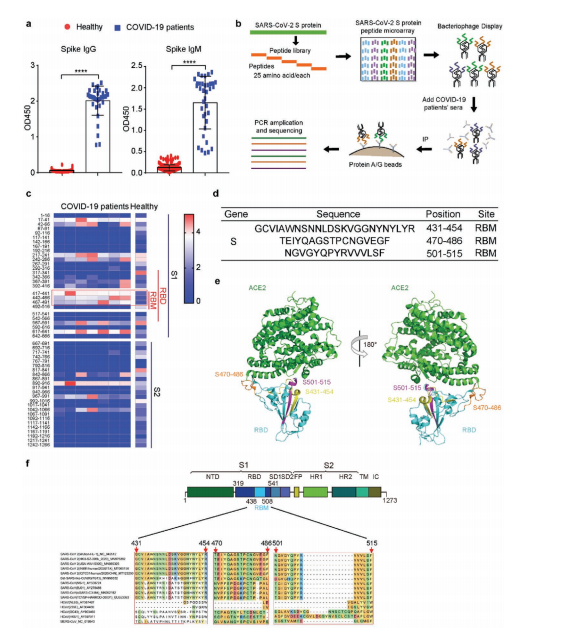
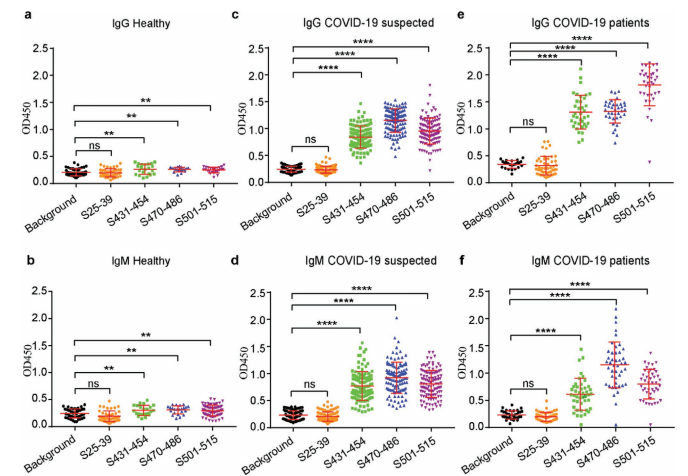
A 2021 Small Methods study used dual phage display libraries — an overlapping spike peptide library for epitope mapping and a 8.7×10⁹ patient-derived ScFv library for antibody discovery — to identify three immunodominant RBM epitopes (S431–454, S470–486, S501–515) and isolate human neutralizing monoclonal antibodies from COVID-19 patients. S470–486 emerged as the key protective epitope (diagnostic AUC ~1.0; mouse immunization produced neutralizing antibodies). AtaGenix provided phage library construction, biopanning screening, and antibody expression services that enabled the 10⁹-scale discovery campaign. DOI: 10.1002/smtd.202100058.
Contact Us

+86-27-65523339

info@atagenix.com

Building C, R & D Building, No. 666, Shendun 4th Road, Donghu New Technology Development Zone, Wuhan