AtaGenix Laboratories

AtaGenix Laboratories
AtaGenix's phage display antibody discovery platform provides direct access to fully human, mouse, rabbit, and camelid (VHH) monoclonal antibodies — without hybridoma technology and without animal immunization when using naïve libraries. Our proprietary human synthetic antibody library (ATA-HN-SF Mix) reaches 10¹¹ pfu diversity with >90% correct insert rate, covering virtually all germline gene families.
10¹¹
Library Diversity (pfu)
100+
Projects Delivered
4 Species
Human, Mouse, Rabbit, Camelid
~2 wks
Naïve Library Hit
The platform supports both naïve library panning (rapid, no immunization needed) and custom immune library construction (higher affinity for specific antigens). Antibody formats include scFv, Fab, and VHH/nanobody. Naïve library screening can deliver fully human antibody candidates in as few as 2 weeks; immune library projects require antigen-specific immunization and library construction upfront.
| Library | Format | Key Features |
| Human Synthetic (ATA-HN-SF Mix) | scFv / Fab | 10¹¹ pfu, >90% correct insert rate, covers all germline families, normal CDR3 length distribution |
| Naïve VHH (ATA-AN-VHH Mix) | VHH | Camelid nanobody library, CDR3 length 16–24 aa, high diversity |
| Mouse / Rabbit Naïve | scFv | Pre-built naïve libraries for rapid screening without immunization |
| Custom Immune Library | scFv / Fab / VHH | Built from immunized donor B cells, higher target-specific affinity, multi-species |
| Feature | Phage Display | Hybridoma | Single B Cell |
| Screening Range | 10⁷–10⁹ | ~10³ | 10³–10⁴ |
| Immunization Required | Optional (naïve libraries available) | Required | Required |
| Human Antibody Direct | Yes | No (requires humanization) | Limited |
| Sequence Obtained | Directly from panning | Requires re-cloning | Directly from single cell |
| Timeline | Weeks | Months | Weeks |
Fully Human — No Humanization Needed
Our human synthetic library delivers fully human antibody sequences directly from panning. Skip the costly and time-consuming humanization step required after hybridoma discovery.
Multi-Species, Multi-Format
Human, mouse, rabbit, camelid (VHH). scFv, Fab, and nanobody formats. Construct custom immune libraries from any immunized species, or screen our pre-built naïve libraries for speed.
100+ Projects, 5+ Years Experience
Over 100 phage display projects delivered across therapeutic, diagnostic, and research antibody programs. Solid-phase, solution-phase, and cell-based panning strategies available.
AtaGenix's phage display platform combines pre-built naïve libraries (human synthetic 10¹¹ pfu, camelid VHH, mouse, rabbit) with custom immune library construction capability. The service covers library construction or selection, multiple rounds of biopanning (solid-phase, solution-phase, or cell-based), monoclonal ELISA screening, sequence analysis, and recombinant antibody expression with functional validation. Naïve library panning delivers antibody candidates in as few as 2 weeks; immune library projects include immunization and library build upfront. All selected antibodies are delivered with complete sequence data.
Two entry points: start from our pre-built naïve libraries for speed, or build a custom immune library for target-specific high affinity.
01
Library Selection
Naïve: ready to pan
Immune: immunize + build
scFv / Fab / VHH format
02
Biopanning
3–4 rounds enrichment
Solid / solution / cell panning
Polyclonal phage ELISA
03
Screening & Sequencing
Monoclonal phage ELISA
Positive clone picking
Sequence analysis & diversity
04
Expression & Validation
Recombinant expression
ELISA, WB, FC validation
Affinity measurement
Service Scope
| ✓ Naïve library panning (human, mouse, rabbit, VHH) | ✓ Custom immune library construction (any species) |
| ✓ scFv, Fab, and VHH antibody formats | ✓ Solid-phase, solution-phase, and cell-based panning |
| ✓ 3–4 rounds biopanning with enrichment tracking | ✓ Monoclonal ELISA screening + sequence analysis |
| ✓ Recombinant antibody expression (E. coli / 293 / CHO) | ✓ Functional validation (ELISA, WB, FC, Biacore) |
| ✓ Antigen epitope mapping | ✓ Affinity maturation (optional) |
Case Highlight — Naïve VHH library screening: 4 rounds of panning against Target A, 96 monoclonal clones picked, 56 positives (58% hit rate). Top 9 sequences expressed as soluble VHH antibodies with confirmed binding affinity.
Looking for other discovery platforms? Hybridoma for traditional mouse mAb. Single B Cell for rapid rabbit mAb with high affinity. Affinity Maturation to improve hits from any platform.
How fast can I get antibodies from naïve library panning?
Naïve library panning (using our pre-built human, VHH, mouse, or rabbit libraries) can deliver antibody sequences in as few as 2 weeks from receiving your antigen. The sequences can then be expressed as recombinant antibodies in E. coli, HEK293, or CHO for functional validation. Immune library projects take longer due to immunization (4–8 weeks) and library construction upfront.
What is the difference between naïve and immune libraries?
Naïve libraries are built from unimmunized donors and contain antibodies against virtually any antigen — they require very high diversity (10⁹+) to compensate for lower per-target affinity. Immune libraries are built from immunized donors where B cells have undergone antigen-driven affinity maturation, so even smaller libraries (10⁶–10⁸) yield high-affinity binders for the specific immunogen. We offer both approaches depending on your timeline and affinity requirements.
Why choose VHH/nanobody format?
VHH antibodies (nanobodies) are ~15 kDa single-domain antibodies with extended CDR3 loops (16–24 amino acids vs. 7–12 for conventional mAbs), enabling access to epitopes that traditional antibodies cannot reach — such as enzyme active sites and receptor clefts. They are easy to engineer, express at high yield in E. coli, and maintain stability under harsh conditions. Our naïve VHH library (ATA-AN-VHH Mix) enables rapid screening without camelid immunization.
What validation data is provided?
Deliverables include antibody sequences, monoclonal phage ELISA data, sequence diversity analysis, and recombinant expression QC (SDS-PAGE). Functional validation options include ELISA, Western Blot, flow cytometry (FC), and SPR/Biacore affinity measurement. A detailed project report covers the entire panning and screening process.
Hit rates and affinities are target-dependent. Naïve library hits may require affinity maturation for therapeutic applications. Cross-link URLs above are illustrative — confirm actual page IDs before publishing. Quote-based pricing.
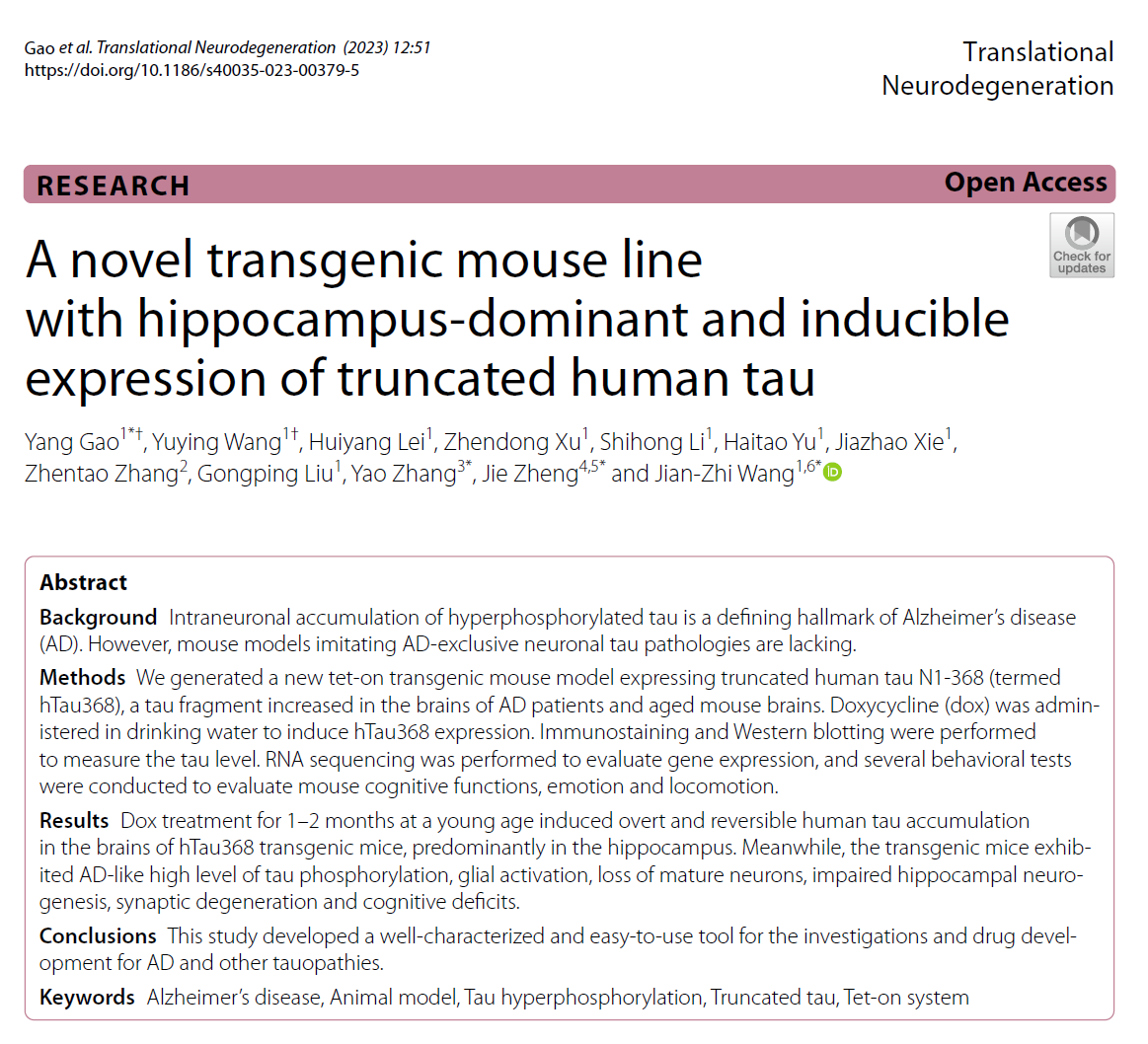
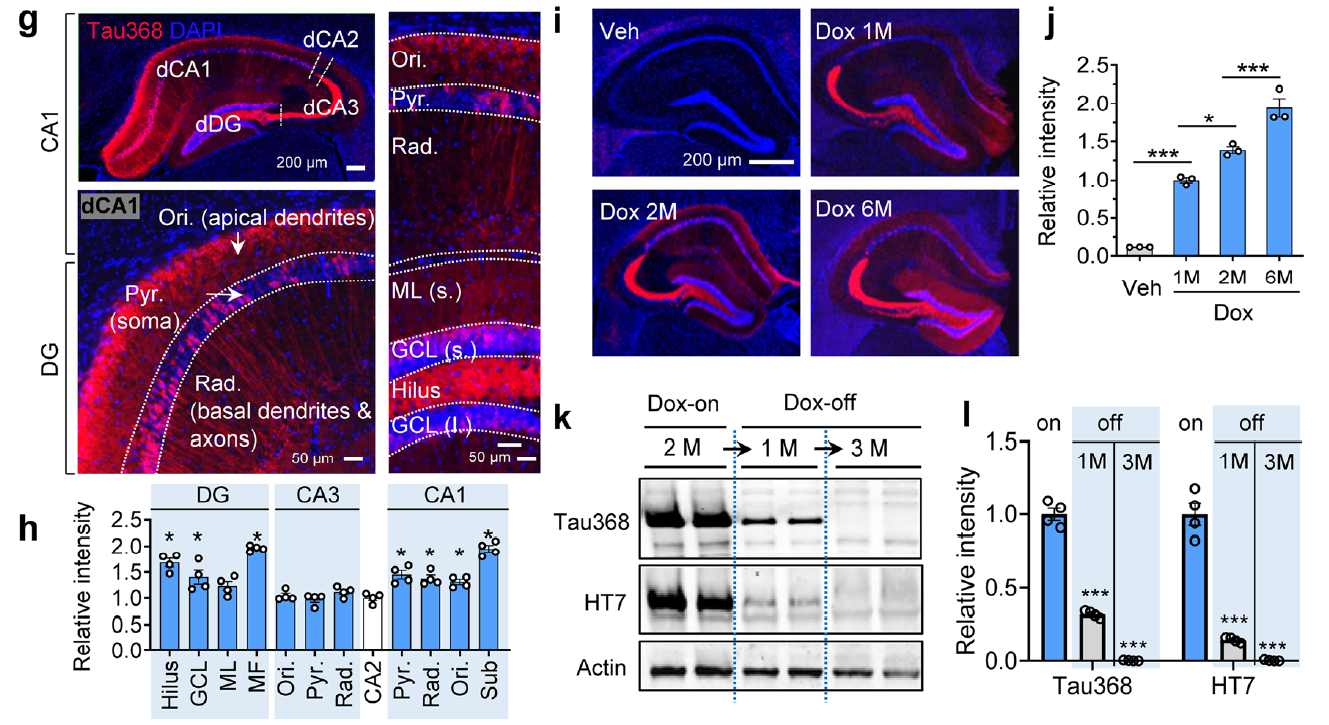
AtaGenix provides highly specific anti-tauN368 monoclonal antibodies to support Alzheimer’s disease research using the hTau368 transgenic mouse model. These antibodies enable precise detection of truncated tau fragments in Western blot and immunofluorescence experiments, validating tau accumulation, phosphorylation, and associated cognitive deficits in the hippocampus. With exceptional specificity and stability, AtaGenix’s solutions empower researchers to explore tau pathology mechanisms and advance tau-targeted therapeutic development.
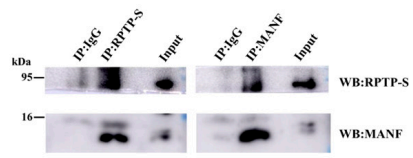
This study experimentally identifies shrimp plasma mesencephalic astrocyte-derived neurotrophic factor (MANF) as an LPS-induced protein that inhibits ERK phosphorylation and Dorsal expression in Litopenaeus vannamei hemocytes, elucidating its inflammation regulation mechanism via a conserved receptor tyrosine phosphatase (RPTP). AtaGenix supports the development of high-affinity antibodies, advancing research progress and providing new insights into the evolution of inflammation in invertebrates.
Contact Us

+86-27-65523339

info@atagenix.com

Building C, R & D Building, No. 666, Shendun 4th Road, Donghu New Technology Development Zone, Wuhan